concept note
Writing about Shivarama Chary itself is yet another opportunity for me to pay a real tribute to a talented sculptor, who handled an assortment of mediums with ease and versatility. He was a nonpareil companion both in our lives and in the art practice, which he termed ‘collaboration’ by creating a trend of a collective work culture amongst his artist friends. He created an affectionate platform at his Sculpting Space (Sculpture Studio) and an ambience of remarkable candour to work along with him while cherishing his camaraderie for a lifetime.Shivarama never believed in the
distinctions of mediums, rather understood the merits of the same by imbibing the sensibilities of craft and art. He worked chiefly in bronze, wood and stainless steel assemblages consciously amalgamating both the traditional and the modern techniques. Undoubtedly, he was a painter with extraordinary sculpting skills and an artisan with an indigenous fervour. Thus he advocated for the collective workmanship without losing the individual contribution in making of an artwork. Fortunately, I was the first one to join hands in his endeavour of coming together to create
unique forms of expression which wecalled ‘Trending Tweets’, a common title for all the exhibitions of artworks created in thisnature.
Unfortunately, the tweets trending this time are about how the young sculptor has left thisworld on his ‘Infinite Voyage’
-never to return! I wonder whether Shivarama’s last monumentalsculpture with the title’Infinite Voyage’ has been
silently whispering his early exit from thismundane reality, only to attain the absolute truth of freedom and bliss… or
the ‘Blossoming Love series’ that he fondly created shall remain as an invaluable gift to his beloved friends
and marooned family?
With these unanswered questions, the artist friends of Shivarama from Hyderabad cometogether to pay tribute to the
young soul with an exhibition of artworks. We immensely thank Ms.Rajni Rekha, who came forward with the proposal
of the exhibition and extended her support to the family of Shivarama Chary. The hundred percent proceeds
generated from this show hopes to support Shivarama’s family of an ailing mother, bereaved wife and the education of
his two daughters aged, 11 and 6 years.
Each artist presents his or her individual pieces, mostly in small formats. The exhibition aspires.to represent multiple
ways of visual thinking that complement each other. While standing together as a homogeneous group of dynamic
and upcoming artists, they trend with their visual tweets.Anand Gadapa
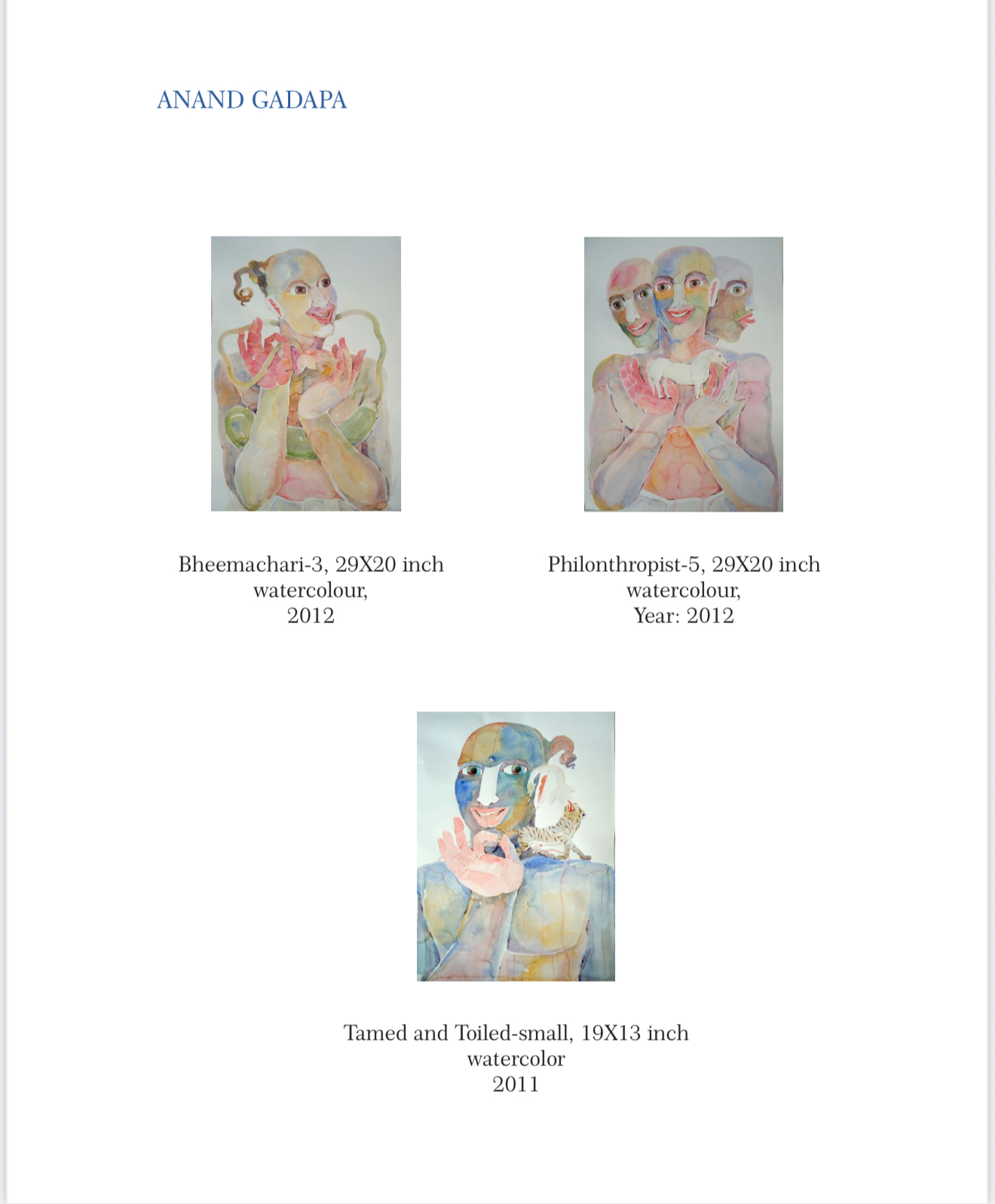
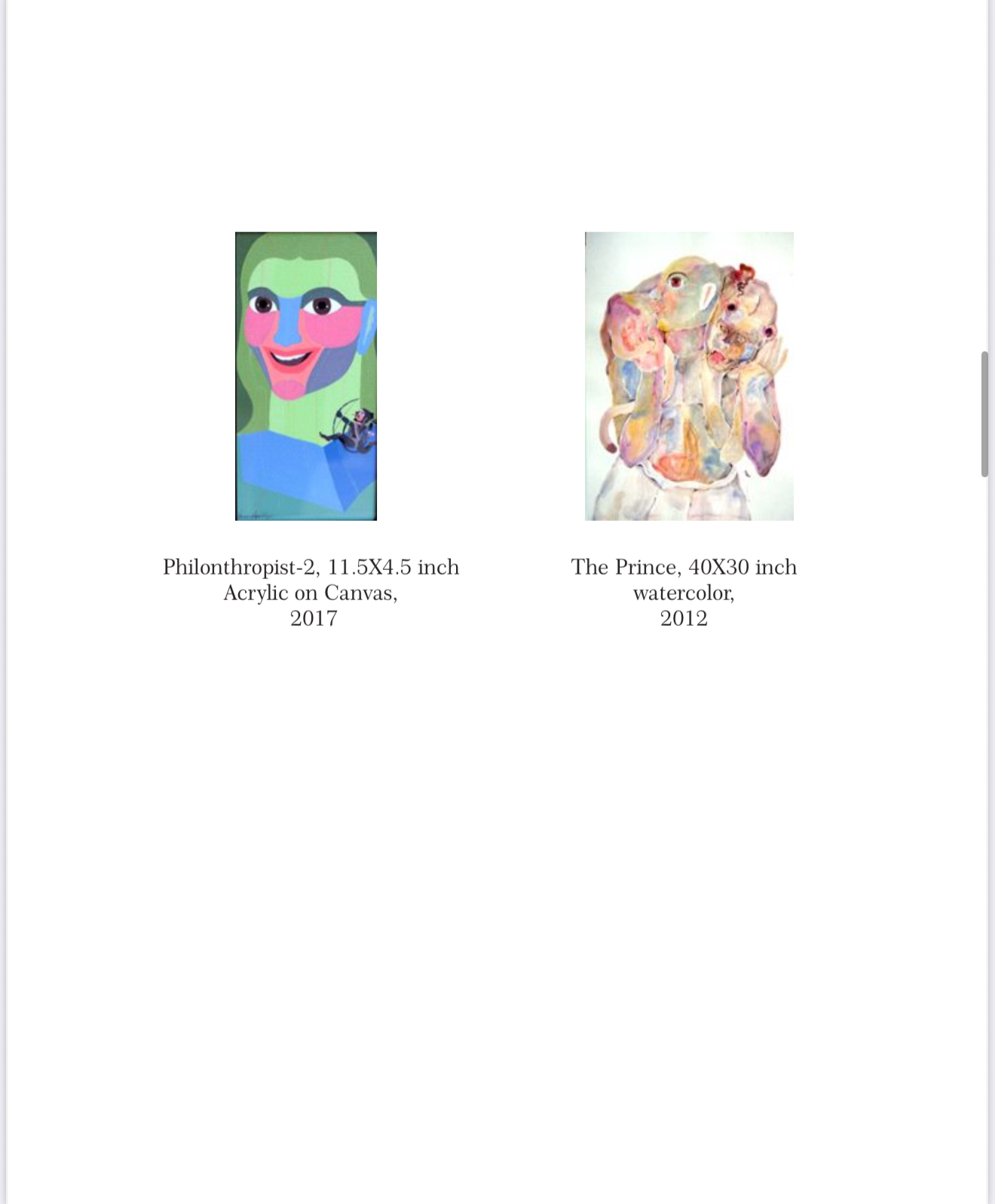
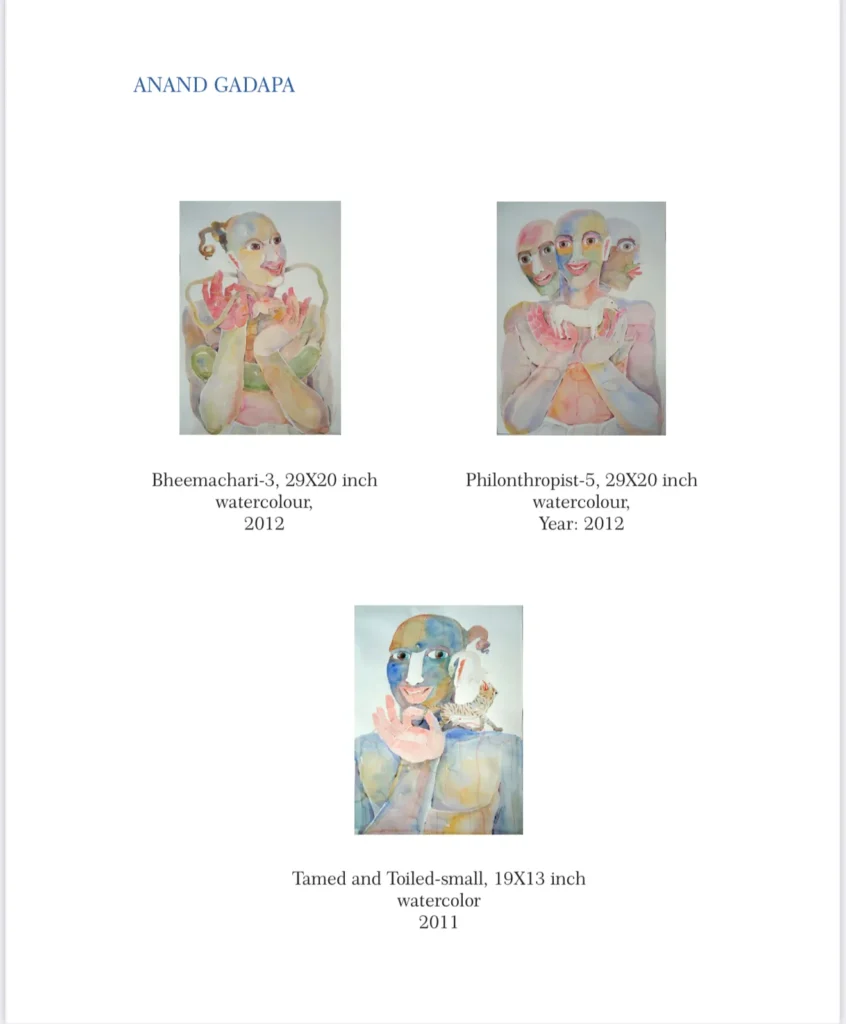
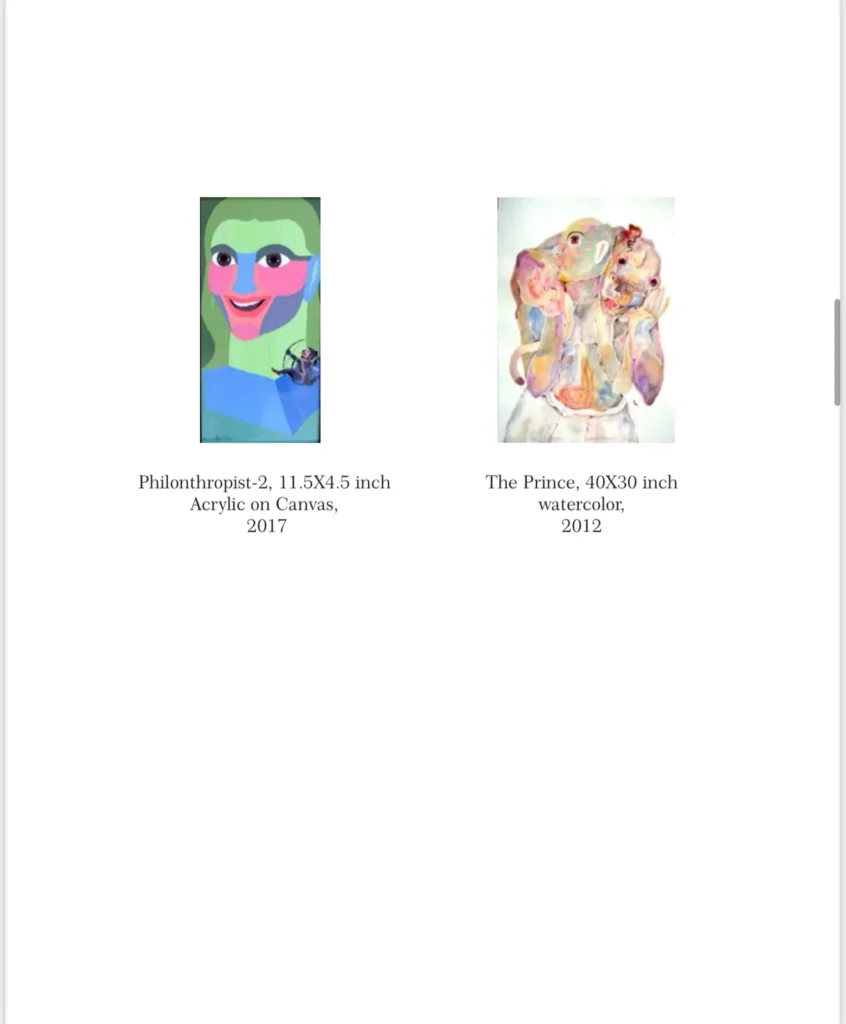
Formalistically, the composition of figures, inspired/borrowed from ‘traditional’ imagery,demonstrates the
aesthetic/visual pleasure, where as conceptually they are not mere human figures but carriers of ambiguous
meanings. Gadapa deliberately makes an attempt to show the ambiguity using metaphoric rudiments, gestures, and
the formulation of visual vocabulary to obscure the artist’s intentionality. There is an effort to exploit ‘symbols’ that
could share/generate multiple meanings. In fact, he would like to stimulate the viewer’s frame of mind and wish to
create a reality in which the viewer can live in. Here the language itselfbecomes ‘unknown’ or ‘the other’, though it
holds deeper meaning. According him, the ‘cognition’ could only be possible by ‘propositional knowledge’.
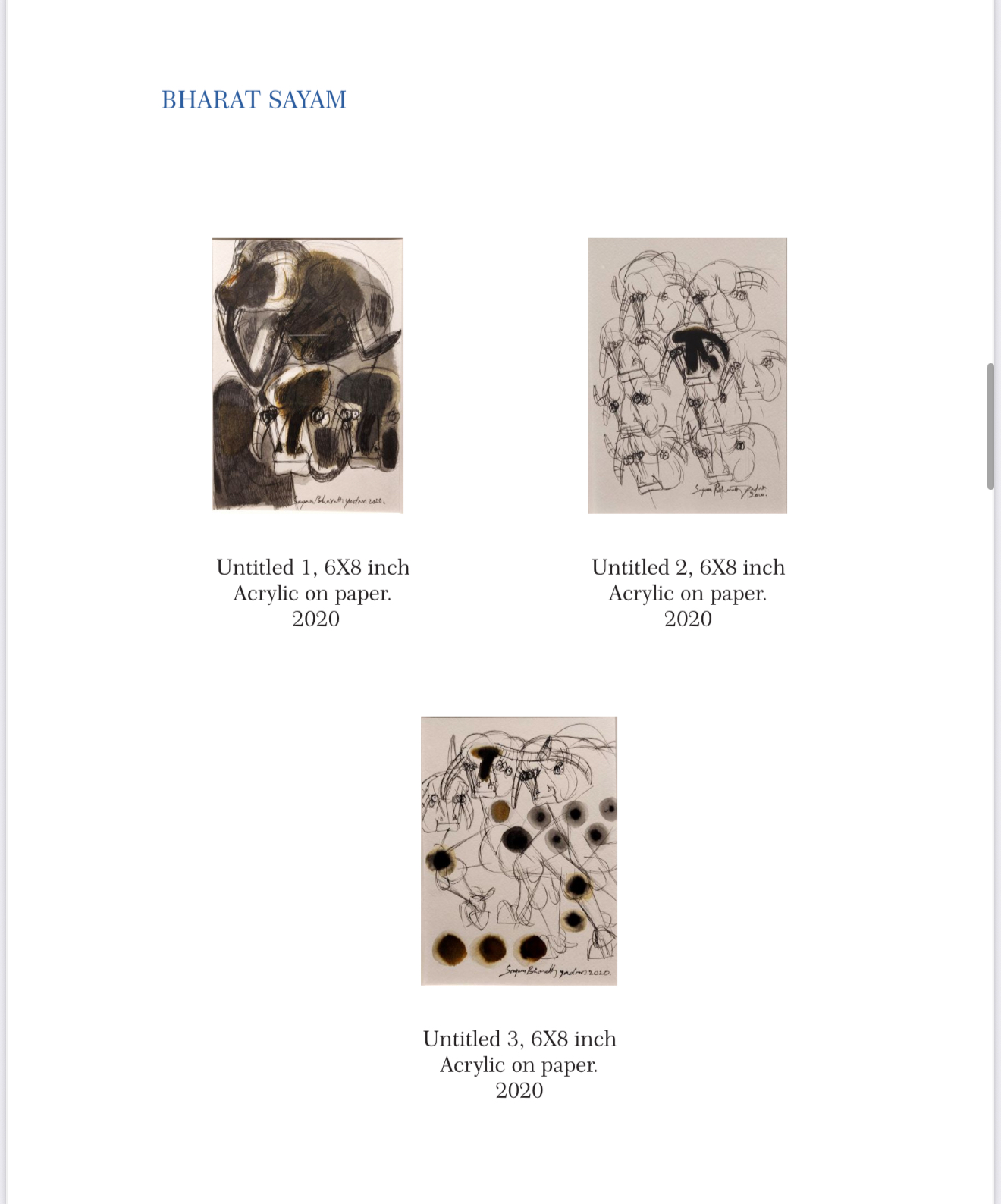
Bharat Sayam With the animal as the central figure, Bharat tries to bring forth his intuitive emotions and social
concerns urging the humanity to show their philanthropic side to take care of the nature,domestic animals and to
maintain equilibrium. At times, he uses the animal to portray his feelings, as if he is one among them and rejoicing the
existing and facing the conflicts of modernization. He had tried to depict various types of the domestic animal, buffalo,
which is also a metaphor for all animals. The portrayal exemplifies his affinity with these domestic animals, such as
Duliah, Sukka and Gujar sharing his childhood memories and experienceswith these animals, which have gradually
become the primary core and content of his work.
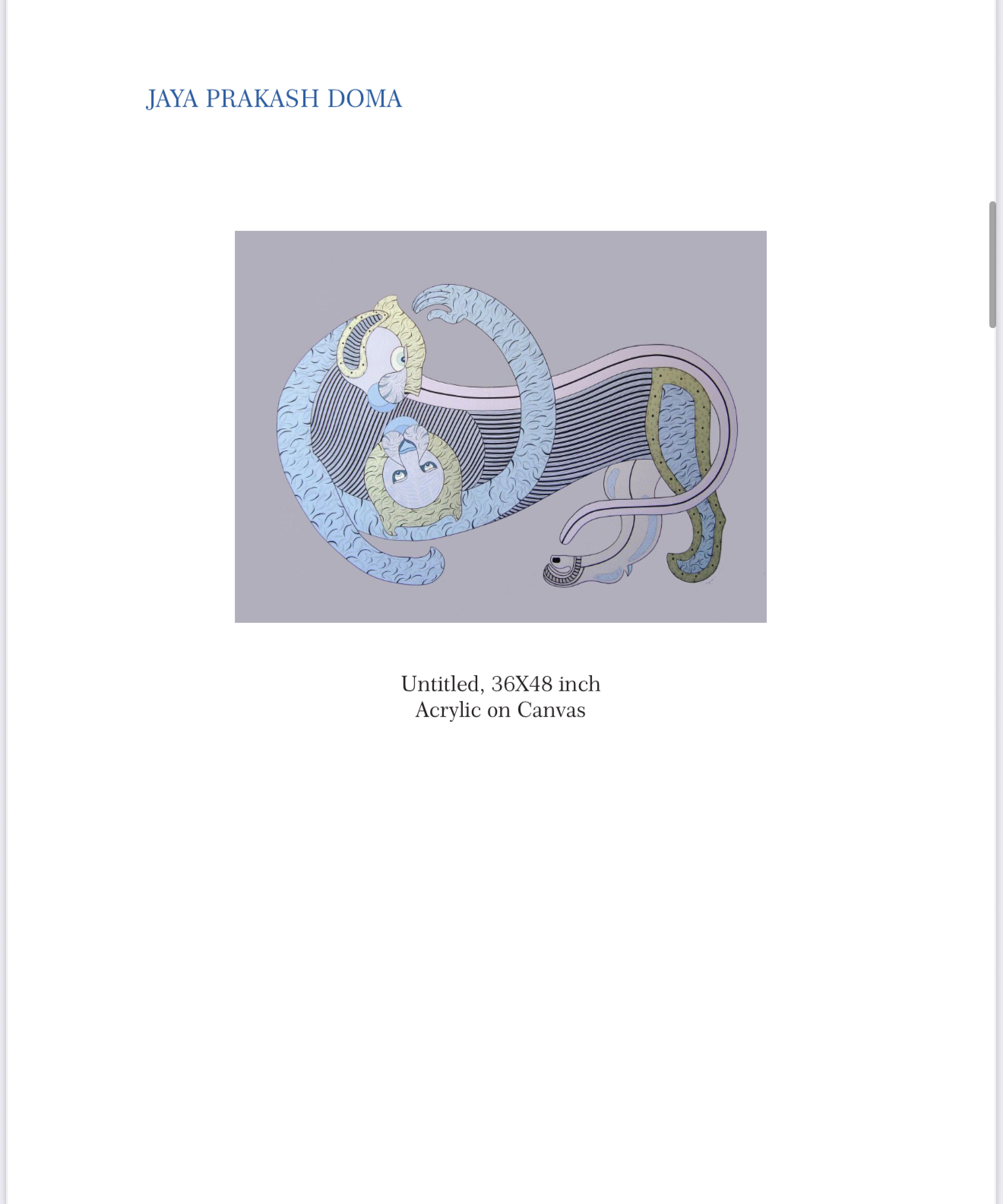
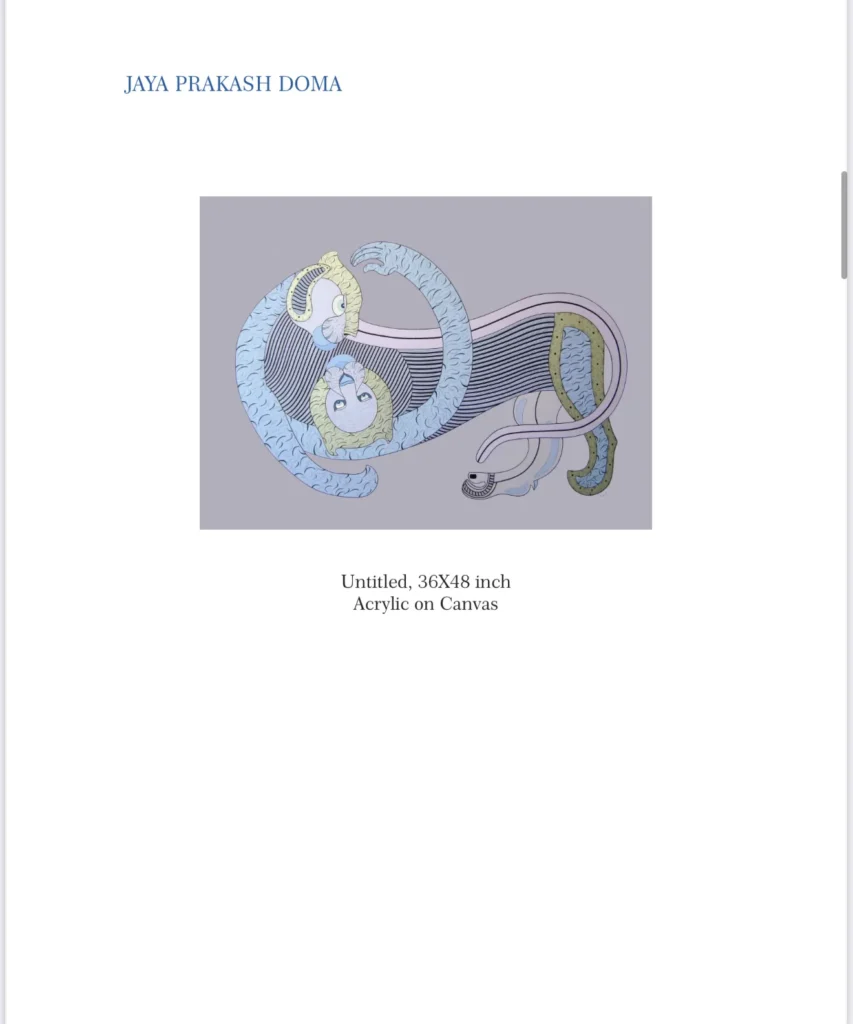
Jaya Prakash Doma Jaya Prakash selectively picks up an interesting fictional imagery of wild animal akin to
the ancient Chimera. He believes that making art is a reflection of nature as well as society thus the metaphoric
Chimera occupies his canvases to produce multiple meanings. Jaya Prakash makes an attempt retouch/re-present
the mythical animal with utmost crafty skills as if the drawing wins over the conventional painting. A careful rendering
of the surfaces with Black& White and colour is seen his paintings. His idea of flaccid animal is here to describe both
the social inactiveness and representation of an imaginative or implausible animal instinct.
Nirmala Biluka
The female protagonist, replicating her ‘self’, remains central in Nirmala Biluka’s “trancetemporal space”. She is a
performer as well as an observer/witness; watching things happeningaround her. The ‘images’ around her do not
remain hushed but start narrating and weaving stories. They often become ‘floating signifiers’ and ‘metaphors’ of the
hidden consciousness.She made an attempt to amalgamate the metaphysical aspect of Indian painting and
her personal choice of femininity, which is conceived metaphorically & philosophically as Shakti energy or prakriti
(nature). For instance, in ‘Vasanta Raaga’, the protagonist is a personification of the myth of nature. The continuous
metamorphosis of birth, growth & decline stands as anultimate truth inviting the spring season with all its rejuvenating
omnipotence.Priti Samyukta Priti Samyukta’s self depictions redefine femininity bringing everything into the space with nquisitiveness. Her works
appear to be autobiographical, lyrical and cling to the ‘traditional’roots that can be seen profoundly, as her ‘collective memory’ is deciphered deliberately within the contours of the image and the imagery that is derived from her house
hold things such as old pillow covers. Her nostalgic opus, inspired from oriental zest, against a multi-layered
back ground, sings the lullaby of the past and the celebration of present as she affirms, ‘journey is more important
than the destination’.
Ravikanth Masuram
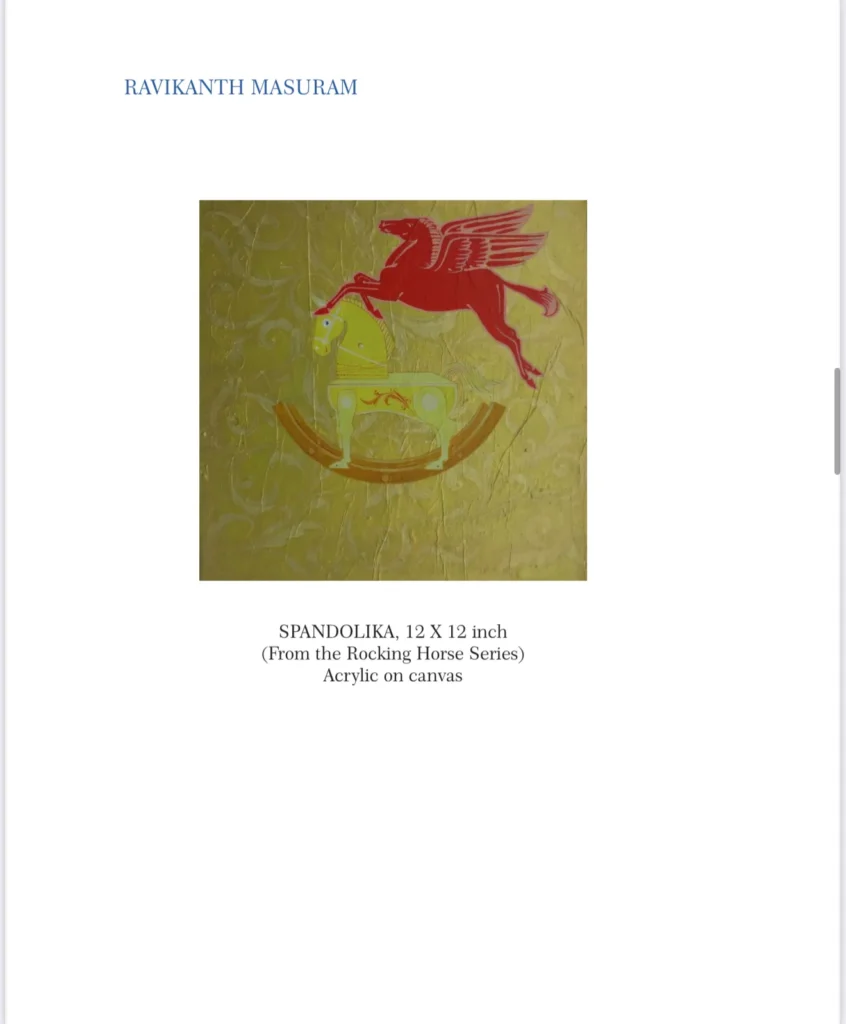
Swinging back and forth Masuram Ravikanth, a promising artist, re-discovers his Spandolika, aplay toy from his
childhood, while searching for an innovative visual vocabulary. (The Sanskrit word spandolika means ‘rocking one’s
self to and fro’). The artist’s enthralling artworks may be termed as his nostalgic renditions of bygone days. These
‘play-toys’ are not mere re- presentations of the bygone era but a deliberate effort to re-contextualize the ‘spandolika’
itself. The metaphors are none other than his childhood belongings which take shape of ‘objects of curiosity’, as the
gifted artist successfully captures the ambiguity and effervescent quality of the ‘spandolika’.