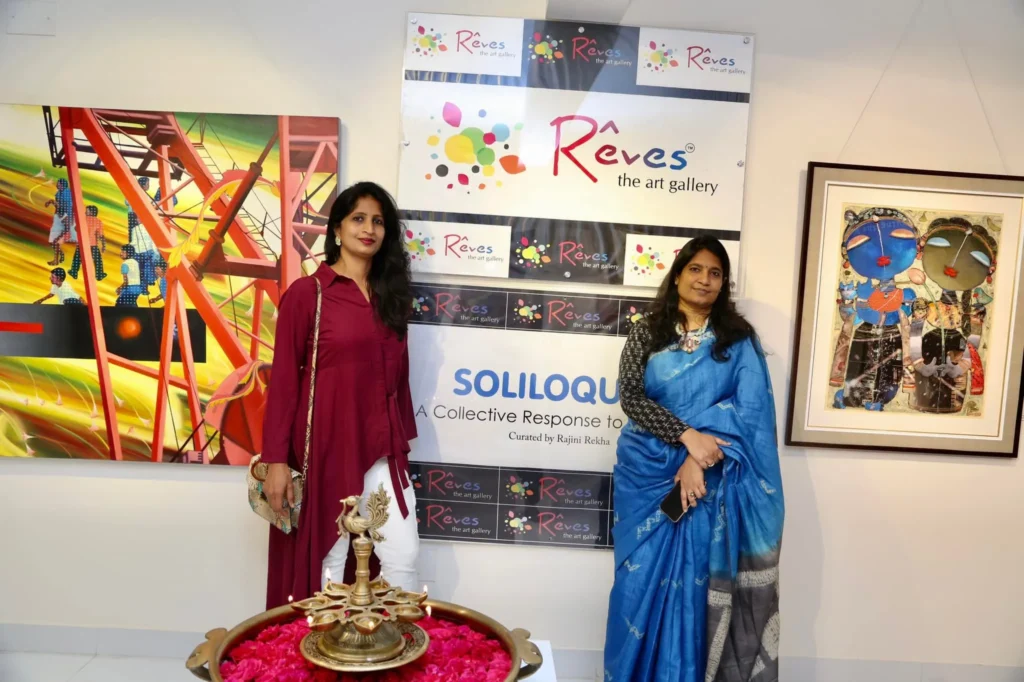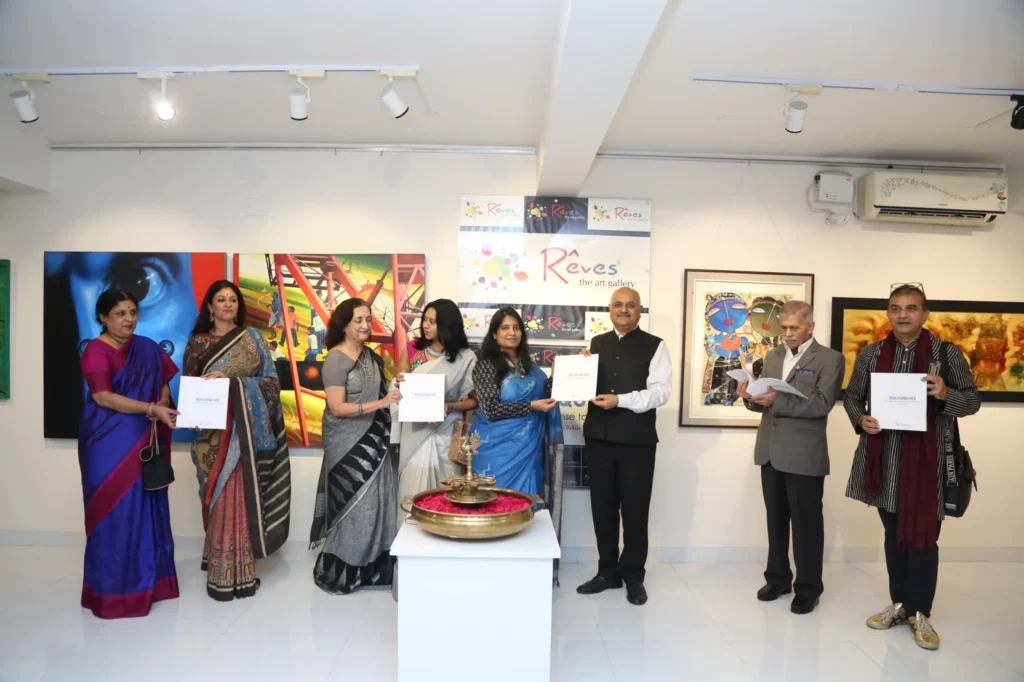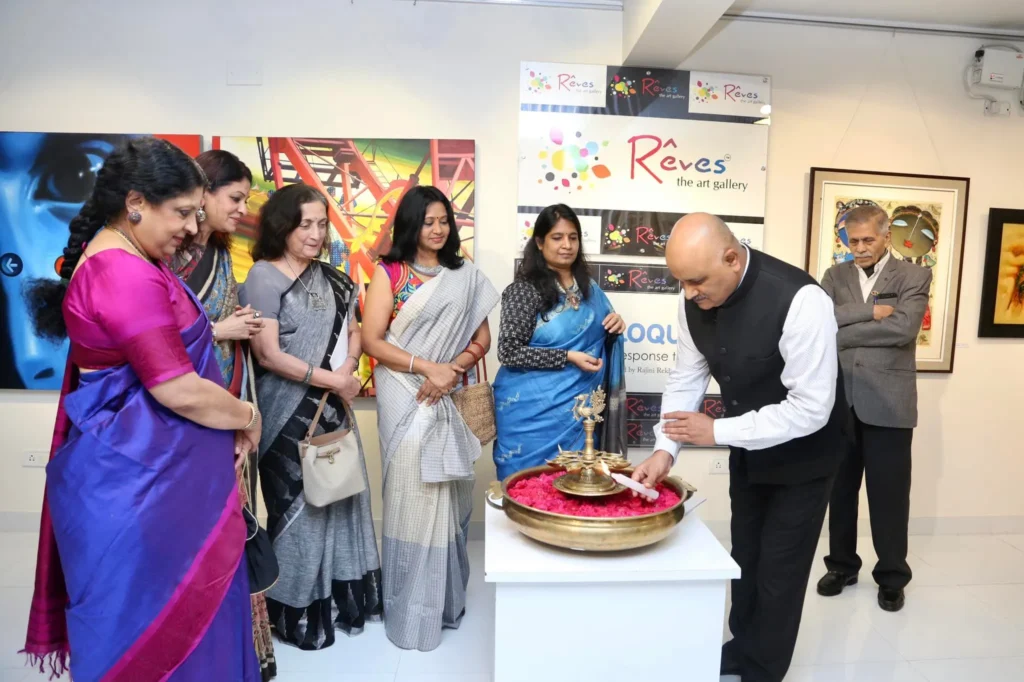
Soliloquies
A Collective Response to Our times
Curated by Rajini Rekha
Date: December 7, 2021
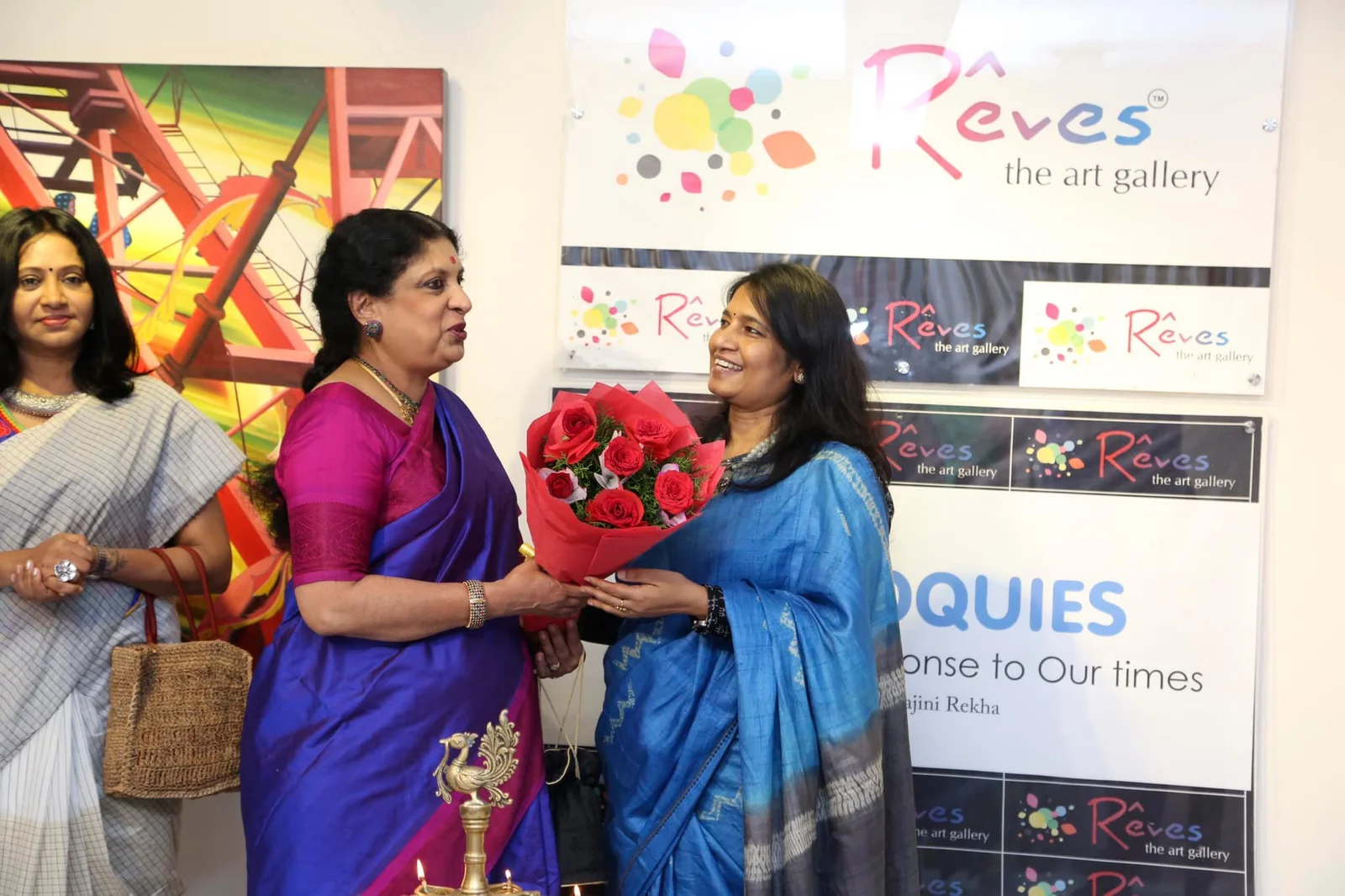
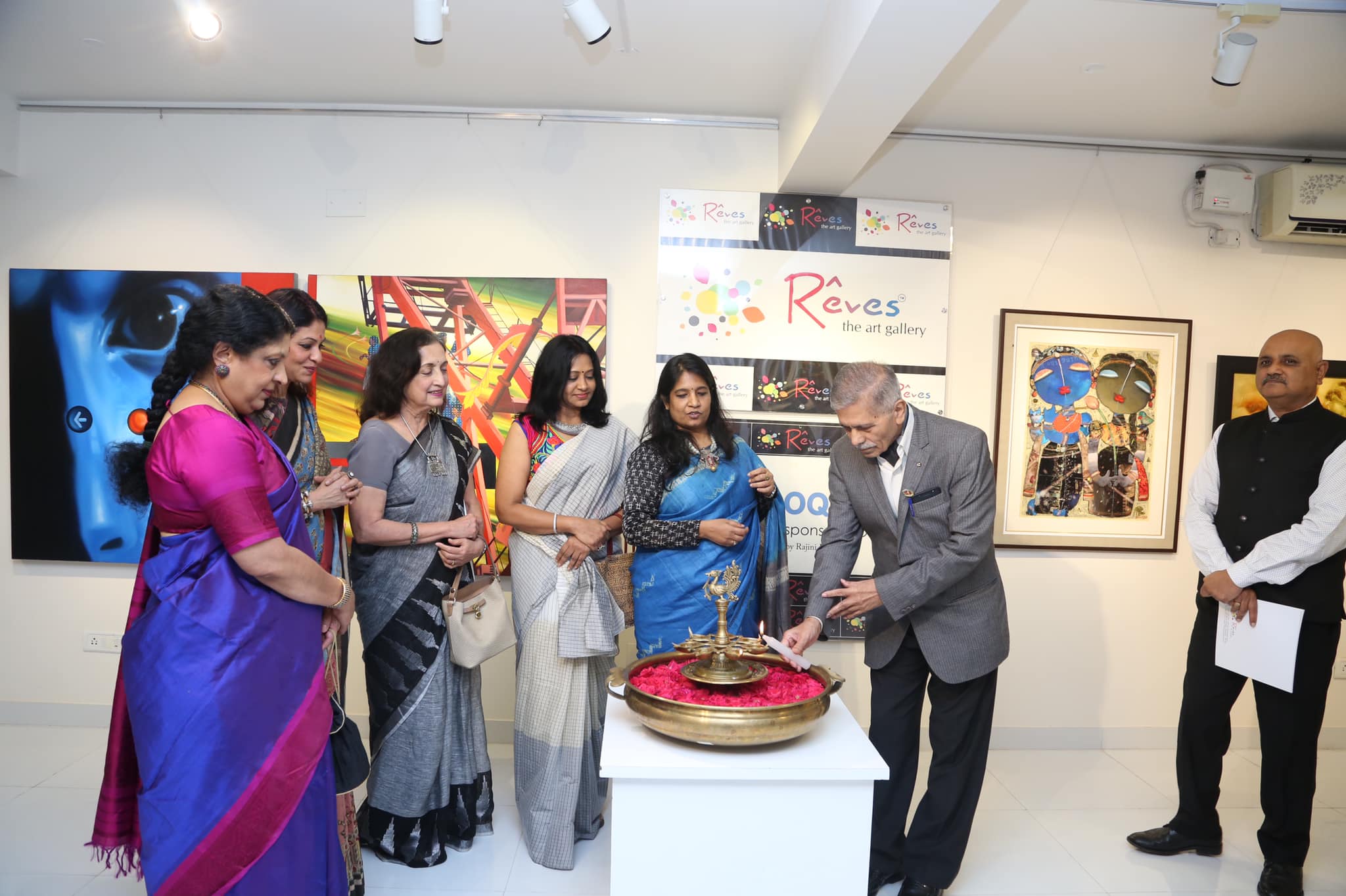
An introspective exhibition, “Soliloquies” brought forward works that reflected on personal expression, inner landscapes and self-reflection in the modern world.


concept note
PROLONGED SOLITUDE life during lockdown
Creativity is a way of living life. Any experience that reveals the human spirit is full of meaning. Artists enjoy solitude and the potential for beauty in loneliness. It is on such occasions that ideas flow abundantly and at their best. However, prolonged solitude can be of a great challenge as in these recent times. There is a dire need to make an effort to channelize energies consciously. The art camp is an attempt to explore how society and art come together when we are distanced from the distractions of our normal lives. ‘Prolonged Solitude’ is about how one seeks inspiration even when constrained indoors, and how one can continue to engage with the spirit of life vibrantly. It offers the space to reflect on the creative thought processes that define artists’ work and expression. Being able to see that there is light despite the tough times, is significant. As well, keeping hope for a better tomorrow – HOPE is indeed a powerful tool while we all sail through these complex shifts in human experience.
In order to facilitate an articulation of the artists innermost experiences, the camp also includes online discussions, talks and dialogues that are essential in sharing and creating a sense of community.
RAJINI REKHA – June 2020
A gallery is capable of supporting the artist community in no greater way than to reach out when the need is the most; the disorienting circumstances created by the pandemic was one such time. Through the concept and framework of a Virtual Camp, Reves Art Gallery offered not only the essence of a continued framework for artists to work within, but also the possibility of documenting the complexities of the period through internalised artistic responses and dialogues. In quickly orienting itself towards online and digital programming, the gallery made space for newer ways of communication, artistic collaboration, and audience interaction, giving momentum to creative energies that seemed stagnant for the first part of the lockdown. It was an important time in which to keep the link between artist, gallery and collector, alive. Art has a healing capacity that connects with both the creator and the viewer.
Artists are presumed to enjoy the idea of isolation and quiet, yet, they cannot produce work in a vacuum. Most often, their inspiration comes from their environment and interactions, from filtered observations of everyday life experiences. The artists invited to participate in the Camp come from varied backgrounds and work in diverse techniques and mediums. For each of them, perhaps, the experience of isolation had a different impact. The compilation of work therefore brings together a cross section of the artists experiences, responses and observations of the period that we are living through.
Touching upon pragmatic aspects of the lockdown first, many of the artists were left without access to their studios and materials,forcing them to innovate in different ways in order to express themselves. It brought about some unique technical experimentation and improvising skill-sets that speaks of artists’ resilience and will to move forward. The globally overwhelming virus situation brought about cancellations, postponements and disappointments – in a fragile and narrow commercial eco-system that exists for the arts in India, it forced a greater financial strain on those that sustain themselves through the making and marketing of it. The cycle of art production, physical viewing, and acquisition came to a standstill; it took time for organisations and institutions to outline substitute methodologies and shift to online technologies in order to fill the lacunas.
As shared throughout the Camp discussions, while some of the artists felt an organic flow of expression in response to the moments of isolation, a few others faced mental blocks, being temporarily unable to bring brush to canvas or pen to paper – limited by the sudden alteration of normal rhythms of life. The proximity of disease and death, uncertainty about survival, and the combined
pressures of mundane and creative processes resulted in emotional as well as psychological disorientation. It was a period that suddenly offered (excessive) time to contemplate; it provided an opportunity to relook at habits and systems, to renew relationships with oneself and others; to understand as well as value the true meaning of human touch and social contact.
Additionally, the pain and helplessness at observing the mass exodus of working-class migrants all over the country compelled many artists, as sensitive beings, to both document and translate this in artworks. The pandemic had a positive impact on the environment however, with less pollution, clear skies, and space for birds, insects and creatures; this also became part of what the artists have looked at and recounted.
Left at a loose end, an artist sometimes requires a framework, a reason – an urge to work. In its role as a cultural facilitator, the gallery brought about new ways of thinking and working for the participants and instilled a sense of positivity in an otherwise gloomy scenario. It meant that elements of private and public overlapped, as the worlds within studios and homes became visible to audiences. Artists seemed to view their own spaces in a new light. During the Camp, that was planned as a sequenced series over several months, grouping participants under a broad thematic, the artists worked at their own pace and within their own spaces.
Under the larger umbrella of ‘Prolonged Solitude’ a few common threads of content run through the compilation – memory and nostalgia, responses to nature and the changing landscape, abstract notations of life and personalised commentaries of socio-cultural structures.
A program like this one is experimental, and a means of learning how to best negotiate a period of uncertainly. It also paves the way in planning for a future that may (or may not) deal with similar circumstances. It has allowed the community of cultural practitioners to ponder over the nature and relevance of artistic practice in a socio-cultural milieu, and brought about urgent questions on the dependency of artists on a fragile system of commerce and income generation that most of them have to be part of. It is a good time to review our sometimes-obsolete practices and hierarchies connected with arts management, and realign the role of art-galleries, patrons, corporate and government entities, along with alternative cultural institutions and of course, artists and curators in a more comprehensive and evolving manner.
Lina Vincent, February 2021